Wednesday, January 23, 2019

History of Republic Day

HISTORY OF CELEBRATING REPUBLIC DAY

India got freedom from the British Rule on 15th August 1947. At that time, there was no permanent constitution of the country. It was on 4th November 1947 that the first draft of the Indian Constitution was presented by the drafting committee to the national assembly. The first draft of the Indian Constitution was signed by the national assembly in both versions, i.e. English and Hindi on 24th January 1950.
Thereafter, the Constitution of India came into effect on Republic Day, i.e. 26th January 1950. Since then, 26th of January is being celebrated as the Republic Day in India. On this day, India was declared as the Purna Swaraj Country and thus we began celebrating this day as the anniversary of the Purna Swaraj Day.
The Constitution of India empowered the Indian Citizens to select their own government. The oath was taken by Dr. Rajendra Prasad as the first president of India at Durbar Hall in the Government House. India has a big history behind celebrating the Republic day.

IMPORTANCE OF CELEBRATING 26 JANUARY

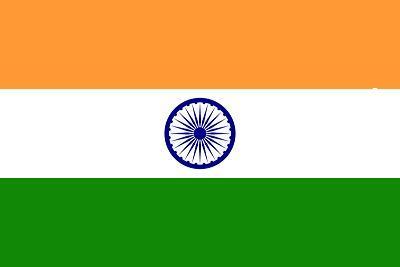
Republic Day is the symbol of true spirit for the independent India where Indian President hoists our national flag and grand military parades, exhibiting the military equipment take place, including a variety of other events. Indian National Flag is tricolor in nature having horizontal stripes, i.e. upper saffron, middle white and bottom of dark green colour divided in equal proportions and a wheel (navy blue colour, having 24 spokes) in the centre representing the Sarnath Lion Capital of Ashoka.
India is a country where people from different cultures, societies, religions and languages live in harmony with each other. The freedom of our country is indeed a matter of great pride because needless to say it was obtained after many years of struggle and great sacrifice.
Therefore, this day is celebrated every year in order to make Indian people feel proud of having taken birth on this multi-cultural land. Republic Day is celebrated in a very colorful fashion in order to make celebrations memorable and special for every Indian Citizen. National Anthem is sung by the people who take part in the celebration. This celebration brings all the Indian people together and instills a feeling of national pride as well as love for our country.
Republic Day 26 January Parade
This is the actual picture from the Republic Day parade at Rajpath where the body guards of our president step out from the President’s house wearing the winter ceremonial dress. The bodyguards for the president are selected through a special selection procedure performed by the Indian Army from cavalry regiment, based in Rashtrapati Bhawan, New Delhi and the senior most unit of the Indian Army. The bodyguards of the Indian President are completely responsible for giving protection to the President of India.
 They remain fully armed with the equipment and BTR-60 vehicles in order to use them during the situation of crisis.This is an exceptionally decorated picture of the Lion Capital at Rajpath on the occasion of the Republic Day of India. Right in front of the Lion Capital is made the map of India decorated with yellow flowers. In the middle of this map, an Indian Flag in tricolor is drawn out. Below the map of India, three circles are made within a big circle using flowers. Clearly, the Lion Capital wears such a mesmerizing look on this day.


History of Indian Republic


The History of the Republic of India begins on 26 January 1950:

      Nation within the British Commonwealth on 15 August 1947. Concurrently the Muslim-majority northwest and east of British India was separated into the Dominion of Pakistan, by the partition of India. The partition led to a population transfer of more than 10 million people between India and Pakistan and the death of about one million people. Indian National Congress leader Jawaharlal Nehru became the first Prime Minister of India, but the leader most associated with the independence struggleMahatma Gandhi, accepted no office. The new constitution of 1950 made India a democratic country.


 The Nation faced 
                           religious violencecasteismnaxalismterrorism and regional separatist insurgencies, especially in Jammu and Kashmir and northeastern India. India has unresolved territorial disputes with China, which in 1962 escalated into the Sino-Indian War, and with Pakistan, which resulted in wars in 194719651971 and 1999. India was neutral in the Cold War, but purchased its military weapons from the Soviet Union, while its arch-foe Pakistan was closely tied to the United States and the People's Republic of China.
India is a nuclear-weapon state, having conducted its first nuclear test in 1974, followed by another five tests in 1998. From the 1950 s to the 1980 s, India followed socialist-inspired policies. The economy was influenced by extensive regulationprotectionism and public ownership, leading to pervasive corruption and slow economic growth. Beginning in 1991, neoliberal economic reforms have transformed India into the third largest and one of the fastest-growing economies in the world, though corruption remains a pervasive problem. Today, India is a major world power with a prominent voice in global affairs and is seeking a permanent seat in the United Nations Security Council. Many economists, military analysts and think tanks expect India to become a superpower in the near future.


About Republic Day


India attained Independence on 15 August 1947. The drafted constitution was enforced on January 26, 1950. This day marks the sovereign, secular, and democratic set up of the country and well known as Republic Day.
About Republic Day
Republic Day of India is celebrated on January 26 since the year 1950. It is of great importance in the history of democracy of the country. It was on January 26, 1950 that the largest constitution of the world was enforced in India. India since then became a Republican state- "For the people, by the people." The constitution assured the people liberal rights and duties guaranteed through the Preamble. Indian holiday will offer you information on Republic Day celebration in India.

Republic Day celebrations
Republic Day is a national holiday in the country. The main highlight of the day is the Republic Day Parade in the capital state of New Delhi. The entire nation participates in the yearly event that lasts for about three hours. Presided by the President and Prime Minister of India, the parade begins from Rajghat. Army, navy, and the armed forces march their way saluting the freedom fighters and the eminent personalities on the dias. The horse-march is another important part of the celebration of Republic Day in New Delhi. National Cadet Corps (NCC) and selected scout boys are part of the event. The parade is followed with regional dances, patriotic songs, and military bike shows. Make a stop in New Delhi during your India travel to see a spectacular show on Republic day in India.


Republic Day in India

REPUBLIC DAY 2019

Republic day 2019 in India will be celebrated on 26th of January, at Saturday. In 2019, India will celebrate its 70thRepublic Day. First Republic Day of India was celebrated in 1950.
REPUBLIC DAY OF INDIA
Republic day in India is celebrated every year with great pride on 26th of January to honour the Constitution of India as it came into force on the same day in the year 1950. It had replaced the Government of India Act, 1935 into the governing document of India.
On this day, national holiday is declared by the Indian Government. The new Indian Constitution was sketched and approved by the Indian Constituent Assembly and decided to celebrate it on 26th of January every year as India became a republic country.

REPUBLIC DAY CELEBRATION

Flag of India                                                                 National Flag of India
Like Independence Day is celebrated to enjoy the hard won freedom of India from the British Rule, Republic Day in India is celebrated to commemorate the coming of its own constitution into force. It is officially celebrated every year in the national capital of India (New Delhi) at Rajpath in the presence of the Indian President. Besides, celebrations in various other states also take place in the presence of their respective state governors by hoisting the National Flag of the country.
January 26 is declared as the national holiday all over the country by the Government of India. It is celebrated throughout the country with great enthusiasm and show by the students and teachers in schools, colleges, universities and other educational institutions.
An excellent parade and salute event is held by the military team at Rajpath in front of the India Gate in New Delhi, India.

Friday, January 11, 2019

History of Indian Prime Minister


Narendra Damodardas Modi is an Indian politician serving as the 14th and current Prime Minister of India since 2014. He was the Chief Minister of Gujarat from 2001 to 2014, and is the Member of Parliament for Varanasi. Modi is a member of the Bharatiya Janata Party (BJP) and the Rashtriya Swayamsevak Sangh(RSS).


Born to a Gujarati family in Vadnagar, Modi helped his father sell tea as a child and later ran his own stall. He was introduced to the RSS at the age of eight, beginning a long association with the organisation. He left home after graduating from school, partly because of an arranged marriage which he rejected. Modi travelled around India for two years and visited a number of religious centres.He returned to Gujarat and moved to Ahmedabad in 1969 or 1970. In 1971 he became a full-time worker for the RSS. During the state of emergency imposed across the country in 1975, Modi was forced to go into hiding. The RSS assigned him to the BJP in 1985, and he held several positions within the party hierarchy until 2001, rising to the rank of General Secretary.


Narendra Modi was born on 17 September 1950 to a family of grocers in VadnagarMehsana districtBombay State (present-day Gujarat). He was the third of six children born to Damodardas Mulchand Modi (c.1915 – 1989) and Hiraben Modi (born c.1920). Modi's family belonged to the Modh-Ghanchi-Teli (oil-presser) community, which is categorised as an Other Backward Classby the Indian government.
As a child, Modi helped his father sell tea at the Vadnagar railway station and later ran a tea stall with his brother near a bus terminus. Modi completed his higher secondary education in Vadnagar in 1967, where a teacher described him as an average student and a keen debater, with interest in theatre. Modi had an early gift for rhetoric in debates, and his teachers and students noted this. Modi preferred playing larger-than-life characters in theatrical productions, which has influenced his political image.

When eight years old, Modi discovered the Rashtriya Swayamsevak Sangh (RSS) and began attending its local shakhas (training sessions). There, Modi met Lakshmanrao Inamdar, popularly known as Vakil Saheb, who inducted him as a balswayamsevak (junior cadet) for RSS and became his political mentor. While Modi was training with the RSS, he also met Vasant Gajendragadkar and Nathalal Jaghda, Bharatiya Jana Sangh leaders who were founding members of the BJP's Gujarat unit in 1980.Engaged while still a child to Jashodaben, a girl from a family who lived close by, Modi rejected the arranged marriage at the same time he graduated from high school. The resulting familial tensions contributed to his decision to leave home in 1967
Modi spent the ensuing two years travelling across Northern and North-eastern India, though few details of where he went have emerged. In interviews, Modi has described visiting Hindu ashrams founded by Swami Vivekananda: the Belur Math near Kolkata, followed by the Advaita Ashrama in Almora and the Ramakrishna Mission in Rajkot. Modi remained only a short time at each, since he lacked the required college education. Vivekananda has been described as a large influence in Modi's life.


Agriculture in India

In India, about seventy percent of total population is engaged in farming and other agricultural activities. India’s geographical condition is unique for agriculture because many favourable conditions like climate, soil etc. for farming are available here and these agriculture products provide raw materials to a much agro-based company which are abundant in India. Apart from soil and climatic condition every day various scientific techniques and innovations are done for the growth of agricultural production. Agriculture is the biggest industry in India and it also plays a key role in the socio-economic growth of the country.
                                  

                A few months ago our respected Prime Minister Mr Narendra Modi highlighted the importance of agriculture and put emphasis on science and technology used for agriculture. In July, I.C.A.R( Indian Council of Agricultural research) celebrated its eighty-sixth anniversary where our Prime Minister addressed scientists and policymakers and urged them to bring more high technology in farming with the limited resources.


Domestic production

                  This function was not only addressing the scientist but even a standing ovation for farmers. The traditional way of farming cannot be eradicated but practising it with scientific technology can help in production and it should be one of the agenda for a scientist. As India is an agricultural based country and agriculture contributes 16% of total Gross Domestic Product. Ten percent of total export earning depends on agriculture. Thus we don’t have any choice other than developing agriculture technique and improving crop productivity. It is very important to invent technologies in agriculture so that our farmers can feed India as well as the world and can also strengthen the economy of our country. 


                            Mr Modi even appealed the agriculture universities to install radio of their own so that the farmers can be well informed with all the latest technology in agriculture. Students should conduct researchers in the lab and tell farmers how to improve the crop productivity. This “per drop, per crop” mission statement to conserve water and appeal to farmers and scientists to find ways and work for increasing farm productivity through optimum utilization of scarce resources.

Development in agriculture in India

Development in agriculture in India is very important as our economy depends upon it. The resources are limited so it is important to use both traditional as well as scientific approach smartly so that productivity of crops can be improved with the utilization of scarce resources. Well at the end all I can say that guys common stand up as farmers deserve standing ovation as they are one who feeds us. It is their labour that we enjoy.

 It is very rightly said that in India agriculture has its own special place as it is not practised as a mere profession but as a culture and tradition. It should be respected by one and all and everyone should take an oath to conserve the resources used for farming for better productivity and make India such a country that the whole world depends on it to fulfil its hunger.

India is a culturally diverse country where people of various religions with different traditions, values, beliefs, arts & professions live together like family which makes Indian society popular worldwide and considered as one of the most cultured society.  

The majority of this culturally diverse population of India still depends on ‘agriculture’ –its first culture; making India unique in its own way. This holds true as almost all cultural traditions, arts, music has its agrarian inspiration, source and origin, and hence Agriculture is not a mere business but is still the “True Culture of India.”

Agriculture is a way of life the India people live: with its values, beliefs, behaviors, and symbols that they agree to take rationally and pass it from one generation to the other. It is a culture of working together. 

Agriculture has a deep sense of oneness and attachment with family, selflessness in relations, which is not seen in other countries.We have a strong agricultural heritage we inherited from our ancestors. Much of this tradition is still passed down today from parents to children and is a unique culture on its own.

Country of farming

India is a farming country, and there’s honesty here. Farmers live and breathe farming along with their family & they love it. Farming has helped us retain our ancestral values. It teaches us to help our neighbours and anyone else who needs support. It includes being sensitive towards their animals and selfless care for them. We learn practices that conserve water and keep the soil fertile. We also learn to stand united with our families irrespective of the unpredictive yield.


As much as farming is about passing on skills to the next generation, it’s even more about passing on the attitudes and attributes that make a farmer adaptable, inventive, and ethical whether it is ploughed by an ox or 50 BHP tractor.

Most of us have farm somewhere on our family tree. With fewer of us down on the farm, there’s also fewer that understand our culture. As a consequence of this, the young generation is getting away from agriculture and they are not able to answer the simple question, where the wheat has been produced? Raising many questions such as, are we saying goodbye to Agriculture the true culture & heritage of India?

It is very unfortunate that today’s generation is bending more towards the west and moving away from its cultural values, traditions & their roots. This is not their mistake but the mistake of those who do not enlighten their children about their roots & their rich cultural heritage.

Who is supposed to correct this? We have to correct this, and protect our environment, encourage organic farming, and teach our children about values in life. Native communities have to revive land, water, seeds, and traditional food and farming practices, thereby putting the life back in agriculture. 

These ideas are not an alternative for us; these are just a way of our life… We all need to work together as Indians.We have to make all the efforts to preserve our identity through agriculture and get back our diminishing culture.


Time Management

"Time management” refers to the way that you organize and plan how long you spend on specific activities.
It may seem counter-intuitive to dedicate precious time to learning about time management, instead of using it to get on with your work, but the benefits are enormous:
·         Greater productivity and efficiency.
·         A better professional reputation.
·         Less stress.
·         Increased opportunities for advancement.
·         Greater opportunities to achieve important life and career goals.
Failing to manage your time effectively can have some very undesirable consequences:
·         Missed deadlines.
·         Inefficient work flow.
·         Poor work quality.
·         A poor professional reputation and a stalled career.
·         Higher stress levels.
Spending a little time learning about time-management techniques will have huge benefits now – and throughout your career.
Organizational time management is the science of identifying, valuing and reducing time cost wastage within organizations. It identifies, reports and financially values sustainable time, wasted time and effective time within an organization and develops the business case to convert wasted time into productive time through the funding of products, services, projects or initiatives at a positive return on investment.

What are the best tips for managing your time?
One of the biggest problems that most entrepreneurs have isn't just in how they can get enough done in such a demanding market, but also how they maintain some semblance of balance without feeling too overworked. This isn't just about achieving and going after goals around the clock. This is also about quality of life.

Balance is key. If you lack balance in your life, you're going to feel stressed out. Even if you're able to effectively juggle your responsibilities, without proper balance you're going to eventually reach your breaking point. So, it's important to not only follow a system that will help you get things done, but also one where you prioritize personal and family time.

Don't forget to do things like take a walk in the park or just sit and listen to your favorite music with headphones on, or paint a picture, go on a date night and so on. That's more important than you can think. And when you do that, you achieve some semblance of balance. Life is short. So don't ignore those things while you reach for your bigger goals. With that said, here are 15 crucial time management tips for getting the proverbial job done.

1. Set goals the right way.
There's a right and wrong way to set goals. If you don't set your goals the right way, then you'll lack the proper targets, which will force you to fall off track. But when you set them the right way, the sky is the limit. Use the SMART goal setting method to help you see things through. And when you do set those goals, make sure you have powerful deep down meanings for wanting to achieve them.

2. Find a good time management system.
One of the tips for managing your time is to find the right system to actually do it. The quadrant time-management system is probably the most effective. It splits your activities into four quadrants based on urgency and importance. Things are either urgent or important, both, or neither. Neither (quadrant 4) are the activities that you want to stay away from, but it's the not-urgent-but-important quadrant (2) that you want to focus on.

3. Audit your time for seven days straight.
Spend seven days straight assessing how you spend the time you do have right now. What are you doing? Record it in a journal or on your phone. Split this up into blocks of 30 minutes or an hour. What did you get done? Was it time wasted? Was it well spent? If you use the quadrant system, circle or log the quadrant that the activity was associated with. At the end of the seven days, tally up all the numbers. Where did you spend the most time? Which quadrants? The results might shock you.

4. Spend your mornings on MITs.
Mark Twain once said, "If it's your job to eat a frog, it's best to do it first thing in the morning. And If it's your job to eat two frogs, it's best to eat the biggest one first." His point? Tackle your biggest tasks in the morning. These are your most important tasks (MITs) of the day. Accomplishing those will give you the biggest momentum to help you sail through the rest of the day.

5. Follow the 80-20 rule.
Another great time management tip is to use the 80-20 Rule, also known as the Pareto Principle. This rule states that 80% of the efforts comes from 20 percent of the results. In sales, it also means that 80 percent of the sales come from 20 percent of the customers. The trick? Identify the 20 percent of the efforts that are producing 80 percent of the results and scale that out. You can do this with meticulous tracking and analysis.


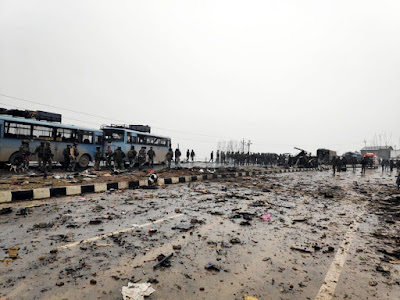
FEB 14,2019 Pulwama Attack

Pulwama Attack 2019, everything about the J&K terror attack on CRPF by terrorist Adil Ahmed Dar, Jaish-e-Mohammad: At least 40 Ce...